


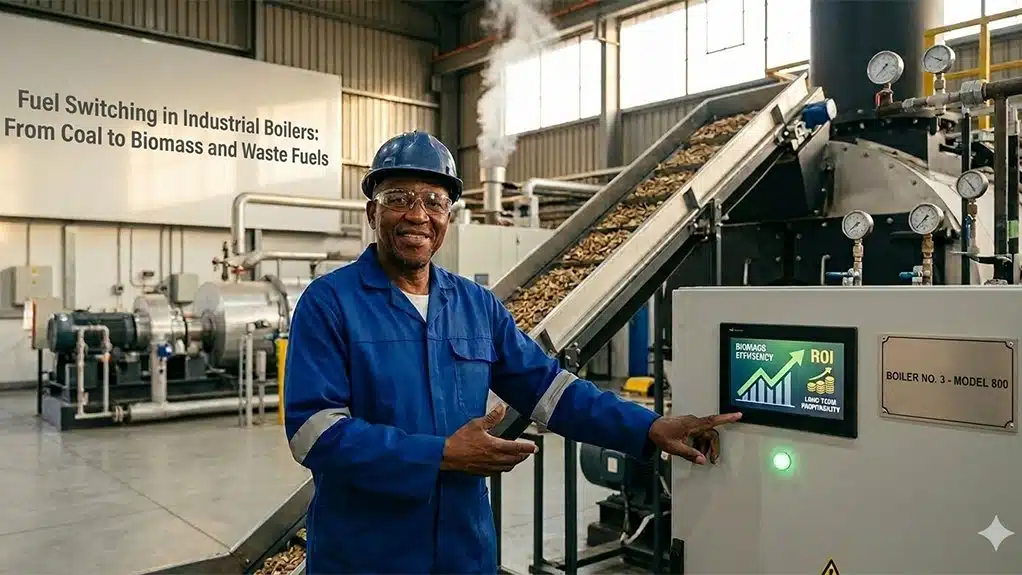
South Africa’s industrial sector sits at the heart of the nation’s economy, powering factories, refineries and public utilities that keep communities running. However, these same systems, built decades ago for reliability and output are now facing growing pressure to evolve as the country transitions toward a low-carbon future. This is why its imperative for these sectors to consider fuel switching in their current operations.
Rising energy costs, aging infrastructure and tightening environmental policies have made fuel efficiency and emissions control central to every industrial operation. Among the most practical solutions gaining traction is fuel switching converting existing coal-fired boilers to operate on biomass, biogas or waste-derived fuels. This shift offers industries a tangible way to reduce carbon emissions without compromising the steady heat output that factories rely on to keep production running smoothly.
The Carbon Tax Act and Its Implications
The Carbon Tax Act, introduced in 2019, marked South Africa’s first step towards pricing carbon emissions and encouraging industries to reduce greenhouse gas emissions. The policy is being implemented in phases. From 2025, the second phase will bring higher tax rates, stricter reporting and reduced offset allowances.
In simple terms, companies that continue to rely heavily on coal and other fossil fuels will face steeper costs, while those investing in greener technologies will gain a long-term advantage. The Act is shifting carbon management from a compliance exercise to a strategic business decision, one that directly impacts profitability, competitiveness and reputation.
Fuel Switching
For industries dependent on steam and thermal energy, replacing entire boiler systems is rarely viable. However, fuel switching offers a cost-effective and technically achievable alternative. By modifying combustion systems, fuel-feeding mechanisms and control technologies, existing coal boilers can be adapted to run on renewable or waste-based fuels.
The benefits are measurable:
- Lower carbon tax exposure through reduced fossil fuel use
- Operational continuity without full system replacement
- Access to renewable energy incentives and green finance
- Improved public and investor confidence through visible sustainability progress.
Moreover, using locally available biomass or waste fuels can stimulate rural economies and support a circular supply chain, turning by-products from agriculture, forestry and manufacturing into sustainable energy sources.
Engineering the Transition
Transitioning to alternative fuels requires deep technical expertise in combustion systems, emissions control and materials engineering. To ensure reliability and efficiency, each project must consider factors such as fuel type, calorific value, storage and feeding systems.
John Thompson, a division of ACTOM, has long been a leader in engineering excellence, assisting clients to significantly reduce their carbon emissions through the retrofitting of firing systems from coal to renewable fuels. This approach enables industries to lower emissions and carbon tax liabilities without replacing entire boiler systems, supporting a smoother transition into renewable energy.
Through engineering innovation and practical expertise, John Thompson continues to help shape the future of industrial energy, enabling a cleaner and more sustainable path forward for South Africa’s industrial sector.
For more information on John Thompson Boilers – Click here
Read on Engineering News – Click here